



Planning Well and Septic Placement in Florida
For homeowners and builders in Florida, proper placement of private wells and onsite sewage systems is not just about compliance, it’s about protecting drinking water and the environment. This 2026 guide breaks down Florida’s latest regulations on well and septic system placement, offering clear insights into required setbacks, design standards, and permitting procedures for new construction.
Table of Contents
- Minimum Distances Between Wells and Septic Systems
- Setback Requirements from Structures and Water Bodies
- Design Best Practices for Groundwater Protection
- Permitting Process and Regulatory Framework
- Local Variations and Environmental Sensitivity
- Conclusion: Safe Siting Means Safer Water
Minimum Distances Between Wells and Septic Systems
Florida’s Chapter 62-6, F.A.C. outlines clear minimum horizontal separation distances to protect groundwater:
| Well Type | Minimum Separation |
| Private potable well | 75 feet |
| Public potable well (≤2,000 gpd) | 100 feet |
| Public potable well (>2,000 gpd) | 200 feet |
| Non-potable/agricultural well | 50 feet |
These distances are measured horizontally from the well casing to the nearest edge of the septic system including the tank. For best protection, locate wells up-gradient of septic systems whenever possible.
Setback Requirements from Structures and Water Bodies
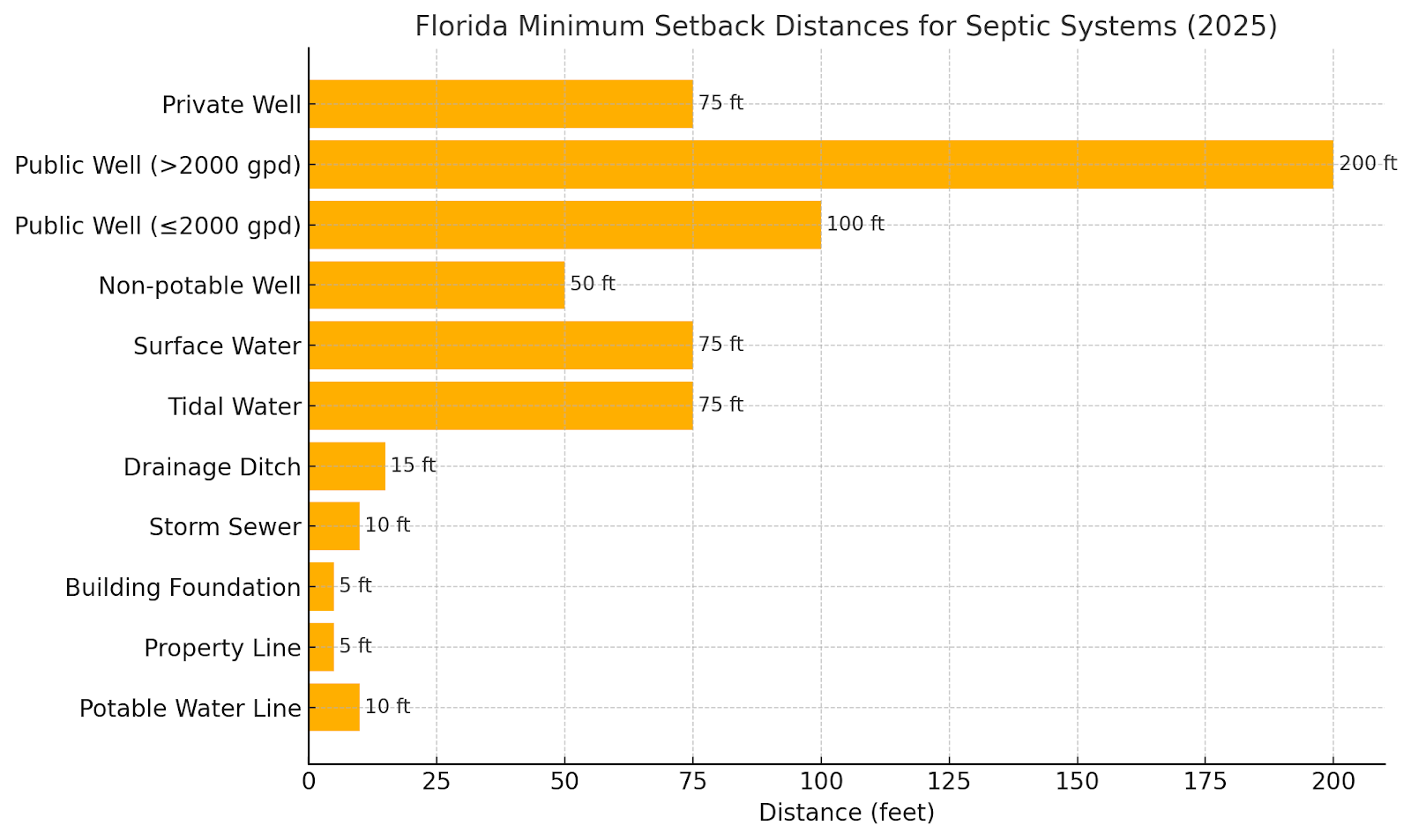
Septic components must also maintain safe distances from other property features:
| Feature | Required Distance |
| Building foundations | 5 feet |
| Property lines | 5 feet |
| Surface water bodies (lakes, rivers, bays) | 75 feet |
| Tidal waters (mean high water) | 75 feet |
| Drainage ditches or retention areas | 15 feet |
| Storm sewer pipes | 10 feet (5 ft min) |
| Potable water lines | 10 feet (or sleeved if closer) |
These buffers ensure wastewater does not migrate into drinking water supplies or neighboring properties.
Design Best Practices for Groundwater Protection
1. Vertical Separation to Water Table
Florida mandates at least 24 inches between the bottom of the drainfield and the seasonal high water table. Mounded systems or engineered fill may be necessary on sites with shallow groundwater. The vertical unsaturated separation has been scientifically proven to show LTAR (long term acceptance rate) of nitrogen in the soil before it reaches the water table.
2. Soil Suitability
Soil must allow for safe effluent absorption. Septic designs are based on percolation rates and soil texture. Sites with “severely limited” soils may require alternative systems.
3. Flood Risk Management
Septic systems must be sited on non-flooding, well-drained ground, with surface grading to divert runoff away from drainfields.
4. Reserve Drainfield Area
A 50% reserve area (equal to half the size of the initial drainfield) is required for future system expansion or replacement.
Permitting Process and Regulatory Framework
A valid septic permit from the county health department is required before installation. Key steps include:
- Soil and site evaluation
- Scaled site plan showing all features and setbacks
- Septic system design conforming to Chapter 62-6, F.A.C.
- Post-installation inspection
Always use licensed contractors or engineers familiar with Florida’s code.
Local Variations and Environmental Sensitivity
While state law sets minimums, counties may impose stricter rules—especially in:
- Spring protection zones (e.g., Wekiva Basin)
- The Florida Keys, requiring nutrient-reducing or aerobic treatment systems
Builders should consult local ordinances for site-specific rules before finalizing plans.
FAQs
What services does Florida Engineering provide for well and septic placement?
Florida Engineering offers comprehensive engineering plans, designs, and inspections specifically for well and septic placement, ensuring compliance with local regulations.
Why are engineering plans important for well and septic systems?
Engineering plans are crucial for ensuring that well and septic systems are designed correctly, function efficiently, and meet all safety and environmental standards.
How does Florida Engineering ensure compliance with local regulations?
Our team conducts thorough site evaluations and utilizes expert knowledge to create plans that adhere to local regulations and best practices.
What types of septic services does Florida Engineering offer?
We provide properties, with a fast turnaround of about 10 business days, including Private Provider Inspections, Septic Site Plans, Consulting Services, Cross-Section Drainage Plans, ATU Design and Certification, Performance Based Treatment System Design, Site & Soil Evaluations, and Construction Drawings & Specifications. Reach out for a free quote.
Safe Siting Means Safer Water
Florida’s well and septic placement regulations are crafted to protect aquifers, public health, and fragile ecosystems. For new construction in 2026, complying with horizontal and vertical setbacks, performing proper soil evaluations, and adhering to permit procedures ensures your system is both code-compliant and environmentally sound.
Overall, the foundation of well and septic placement in Florida is the state code – providing clear minimum distances and design rules – and this is supplemented by local measures where needed. By following Florida’s Administrative Code 62-6 standards, consulting DOH/DEP guidance, and adhering to any local ordinances, homeowners and builders can ensure their new septic system is both compliant and protective of public health. Keeping adequate distances from wells, property lines, and water resources, and designing with future maintenance in mind, will help avoid contamination issues and promote a long-lasting wastewater solution