


Updated September 28, 2026
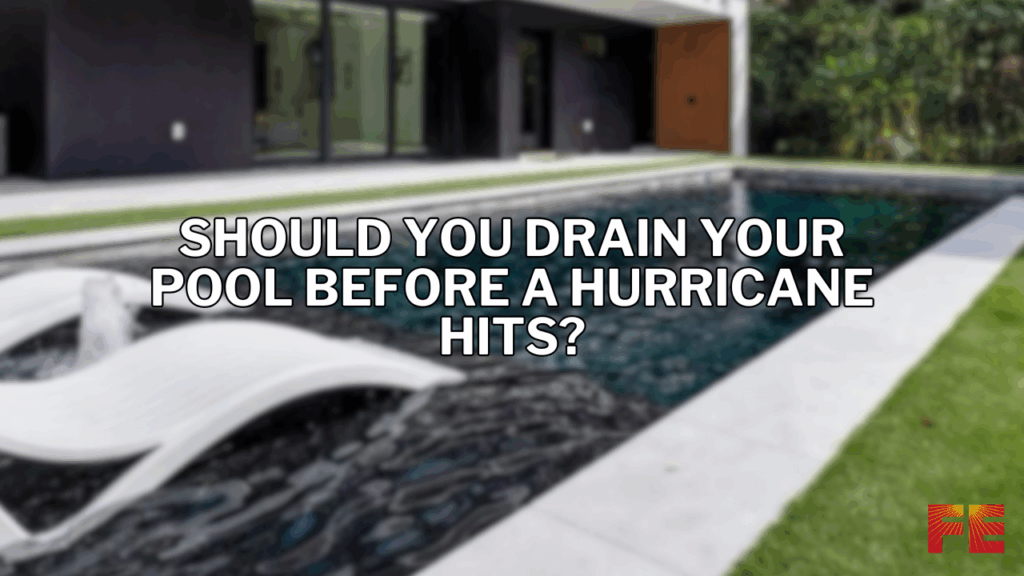
Do not empty an in-ground swimming pool simply because a hurricane is approaching. High groundwater can create uplift risk for an emptied pool. Storm preparation should account for the property, drainage, pool construction, and equipment rather than follow a universal drain-down instruction.
The Florida Swimming Pool Association’s pool-owner guidance advises against emptying a pool for storm preparation. It explains that a pool may remain at its usual level where the surrounding drainage is adequate. Where overflow could threaten nearby structures, seek advice specific to the property instead of assuming that every pool should be lowered by the same amount.
Prepare the area around the pool
Organize preparation before conditions become dangerous. Follow local emergency instructions and complete only work that can be done safely.
- Secure or move loose outdoor furniture and other items that could become windborne.
- Keep accessible surface drains and ordinary drainage paths clear without changing the site’s grading or drainage system.
- Keep required pool barriers secure. Do not create an unprotected opening while moving outdoor items.
- Follow the pool and equipment manufacturers’ storm-preparation instructions.
- Use pool chemicals only as directed by their product labels; do not assume that every storm requires the same treatment or dose.
Take dated photographs of the pool, deck, surrounding drainage areas, and equipment if it is safe to do so. Keep them with any existing plans and maintenance records. This information can help explain a later concern without relying on memory alone.
Why a blanket water-level recommendation is misleading
A pool in a well-drained setting and a pool beside a structure vulnerable to flooding do not present the same situation. Lowering the water changes the conditions acting on the pool, while heavy rainfall can change groundwater and site conditions.
Do not use distance from the coast as a rule for deciding to drain a pool. An inland address does not establish groundwater conditions or prove that emptying the pool is appropriate. Similarly, the amount of rain in a forecast does not by itself establish a safe water-level adjustment.
Check conditions after the storm before restarting equipment
Keep people away from damaged equipment, displaced structures, and other hazards. The Florida Swimming Pool Association advises having motors that have been wet checked by a professional before using them, even if they appear dry. Do not use a fixed “run the filter for 24 hours” instruction as a substitute for checking whether the equipment can safely operate.
Pool cleaning, water testing, chemical treatment, and equipment service should follow the conditions found and the relevant professional and manufacturer guidance. These maintenance tasks are separate from determining whether a pool shell, deck, foundation, or supporting structure needs engineering attention.
What to document if structural damage is suspected
From a safe location, record visible changes such as new displacement, notable cracking, deck movement, erosion, or a change in the relationship between the pool and nearby structures. Photographs alone cannot establish the cause or the repair design, but they can help communicate the concern.
When requesting engineering assistance, provide the property address, available pool or site plans, photographs taken before and after the storm, a description of the changes, and any reports already obtained. State whether the request concerns the pool structure, its surroundings, or proposed repair plans so the scope can be identified.
Discuss a pool engineering concern
Florida Engineering provides pool engineering services. Contact our team about structural concerns or engineering plans, and use a qualified pool-service professional for routine water treatment and equipment maintenance. If draining is being considered after a storm, obtain advice before proceeding; elevated groundwater may still be a concern.